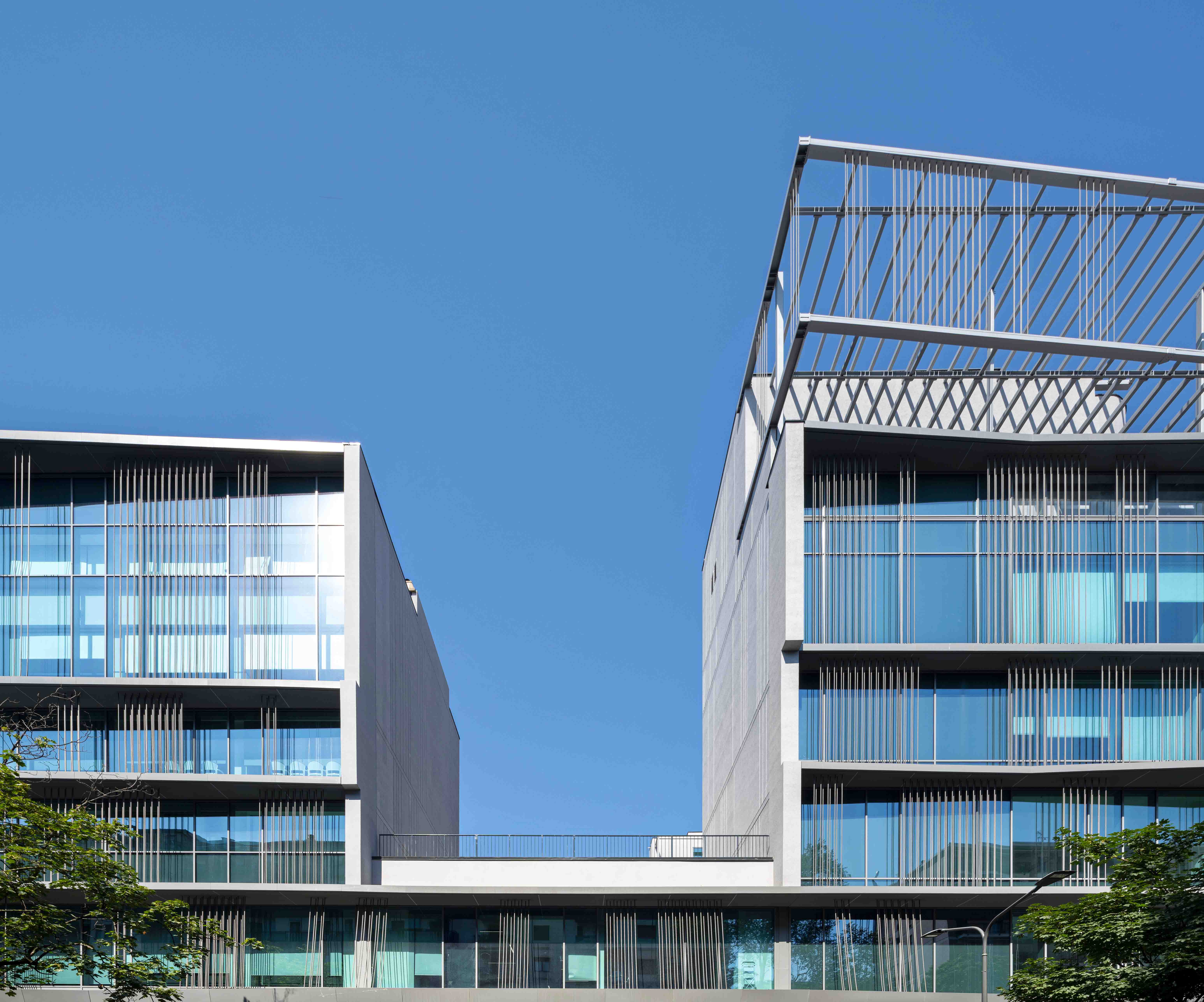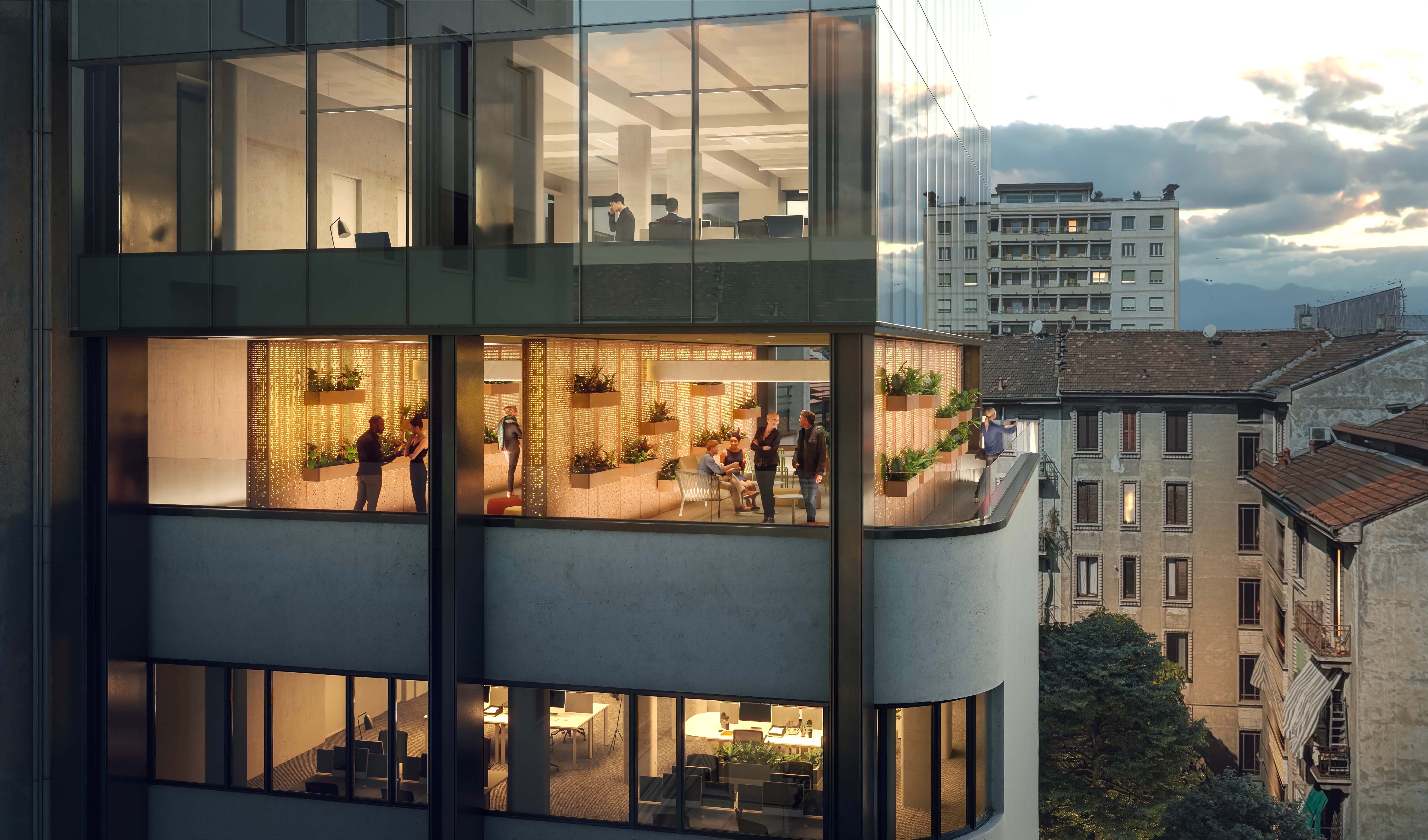

Ex Palazzo Michelin: una presenza architettonica riconoscibile, con un carattere razionalista da preservare e una posizione strategica nel tessuto urbano milanese. Un edificio luminoso con ampie viste sullo skyline di Milano, ricco di potenziale seppur privo di una relazione diretta con la città e con la vita quotidiana delle persone.
(en)
The former Palazzo Michelin is a recognizable architectural presence, with a rationalist character to preserve and a strategic position within Milan’s urban fabric. It is a bright building, with wide views over the city skyline and great potential, although it currently lacks a direct relationship with the city and with people’s everyday life.
Una tensione tra identità e trasformazione
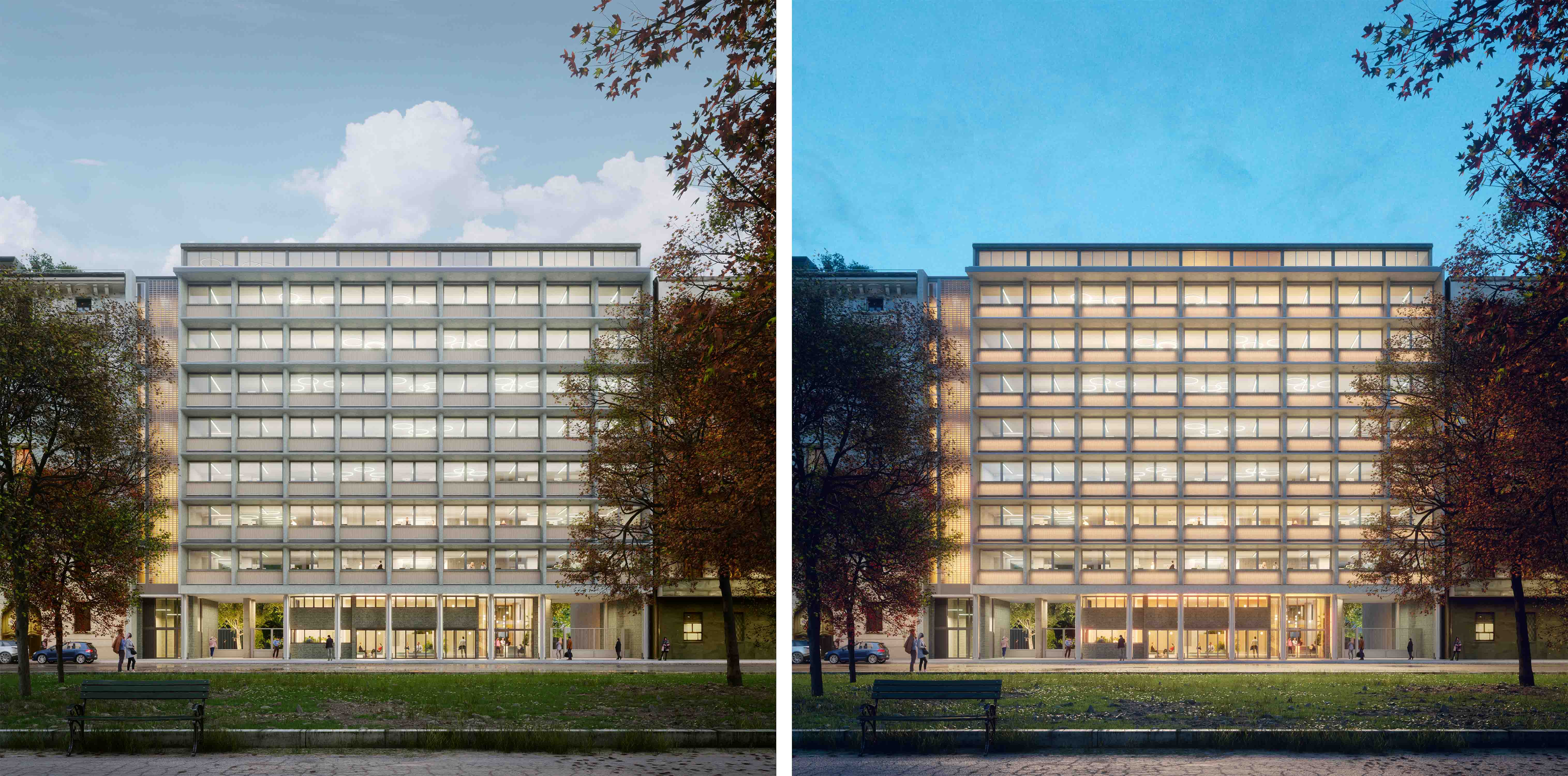
Il progetto nasce dalla tensione tra la necessità di custodire l’identità dell’edificio e quella di trasformarlo in un luogo più aperto, efficiente e abitabile. La facciata storica viene riletta senza cancellarne il carattere, aumentando trasparenza, prestazioni e contemporaneità. Il piano terra, prima angusto e poco permeabile, diventa una nuova soglia urbana: un punto di accesso, accoglienza e relazione con Corso Sempione.
Come può un edificio dall’immagine vincolata tornare a parlare alla città contemporanea?
Una trasformazione dietro le quinte
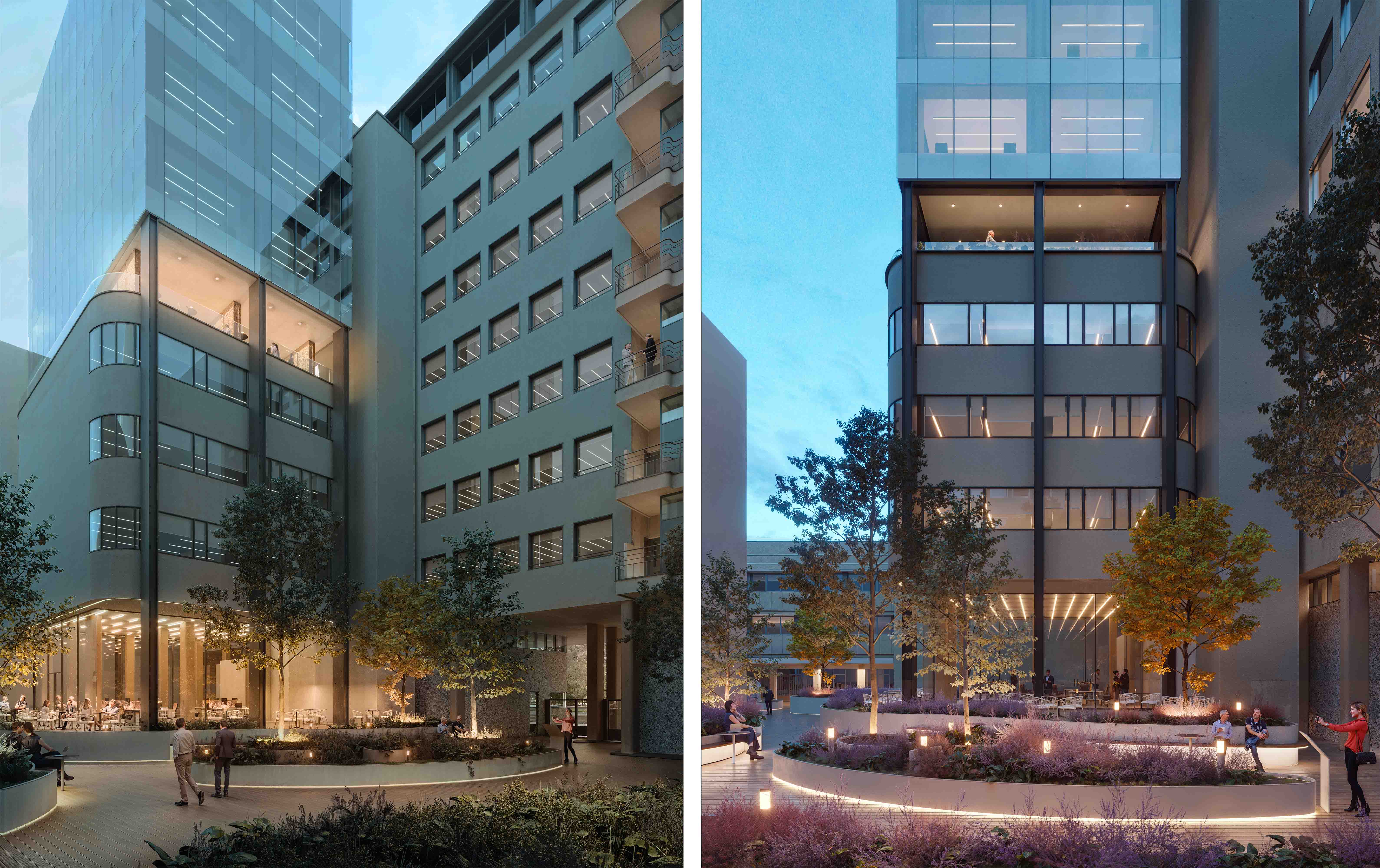
La trasformazione si amplia nel cuore più nascosto del complesso. Quello che era un cortile interno prevalentemente funzionale, percepito come retro, spazio di servizio e luogo di semplice attraversamento, viene reinterpretato come unanuova oasi verde: un ambiente comune capace di restituire valore, qualità e centralità a una porzione finora poco valorizzata dell’edificio.
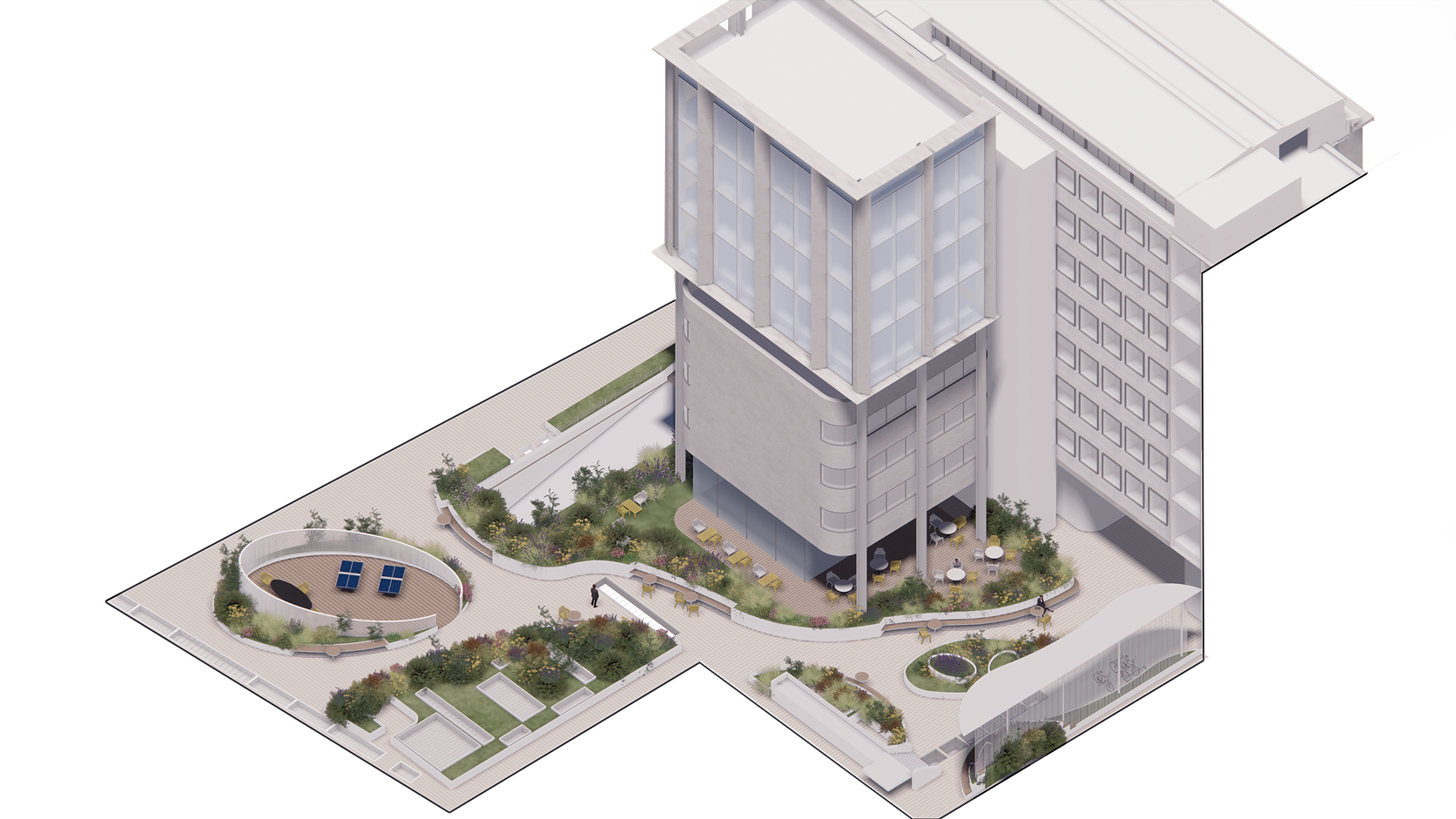
Il cortile diventa così un nuovo paesaggio abitabile, pensato per accogliere modalità d’uso diverse nell’arco della giornata: lavoro informale, pausa, incontro, attesa e socialità. Non più uno spazio residuale, ma una soglia attiva tra interno ed esterno, in grado di ampliare l’esperienza quotidiana degli utenti e offrire nuove occasioni di relazione.
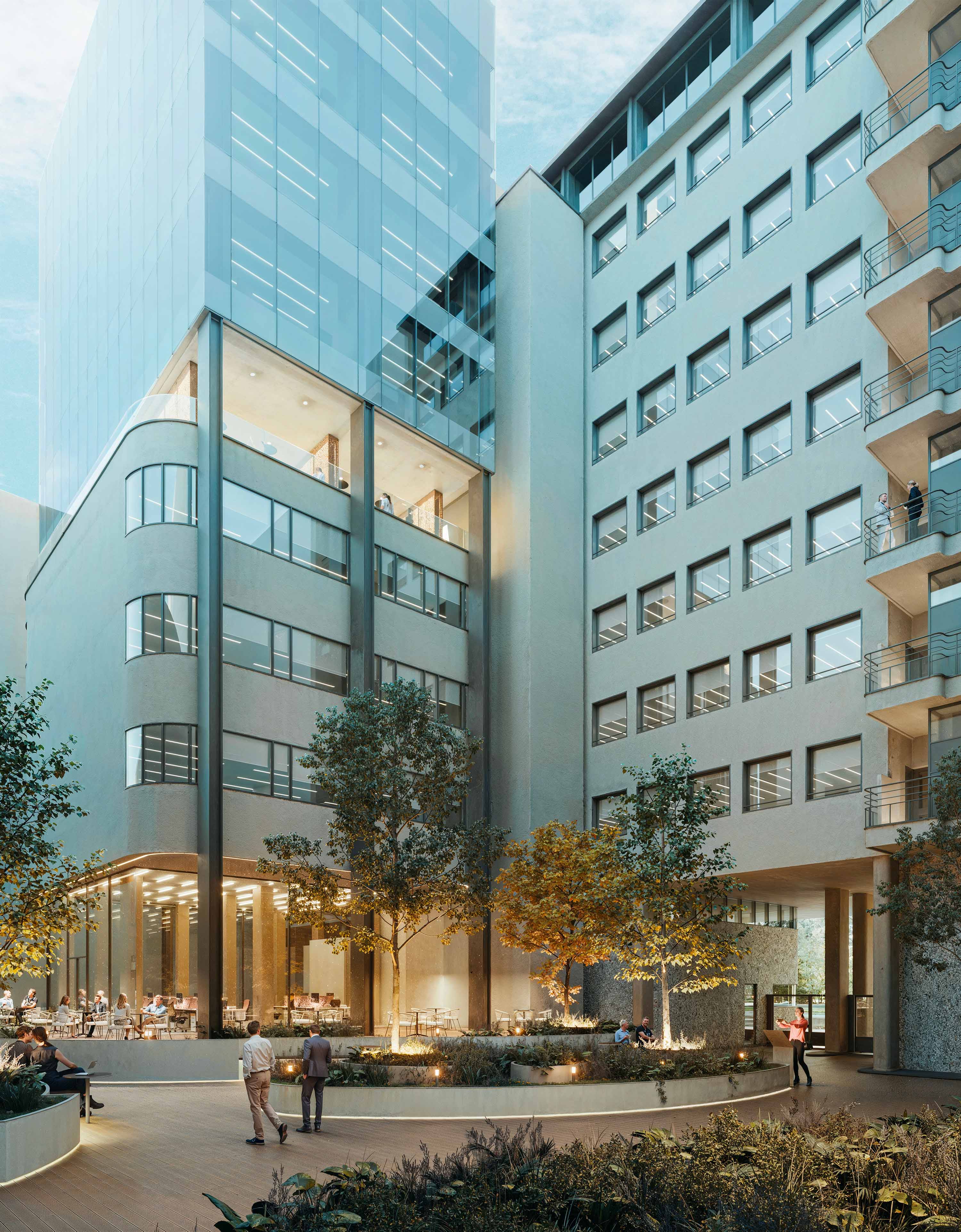
La natura entra nel progetto come vera infrastruttura di benessere: contribuisce al comfort microclimatico, sostiene la biodiversità, migliora la percezione dello spazio e introduce una dimensione più calma, accogliente e rigenerativa. Il verde non agisce come elemento decorativo, ma come dispositivo capace di trasformare l’atmosfera del luogo e generare qualità nel tempo.
Un ecosistema di lavoro esteso
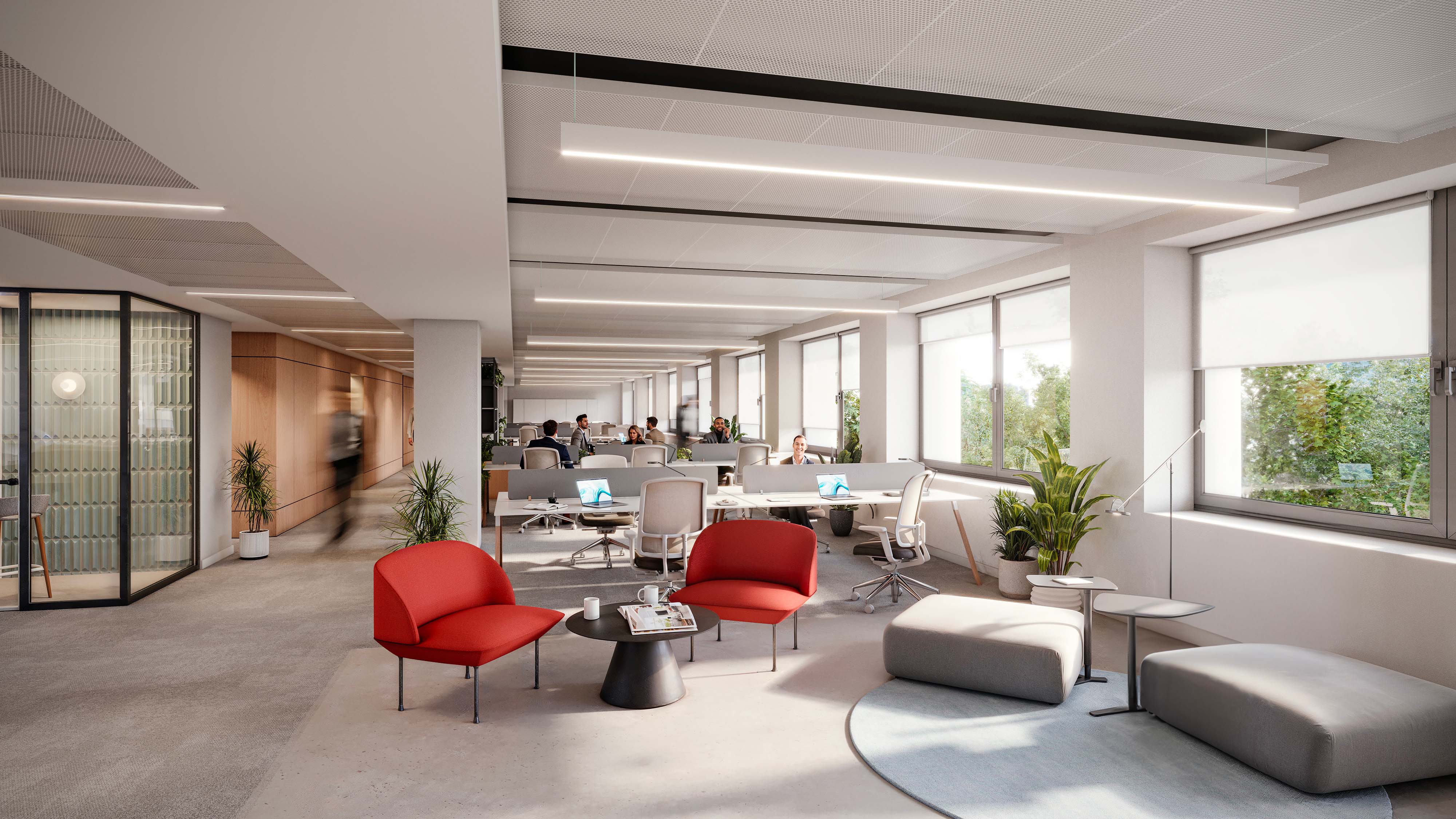
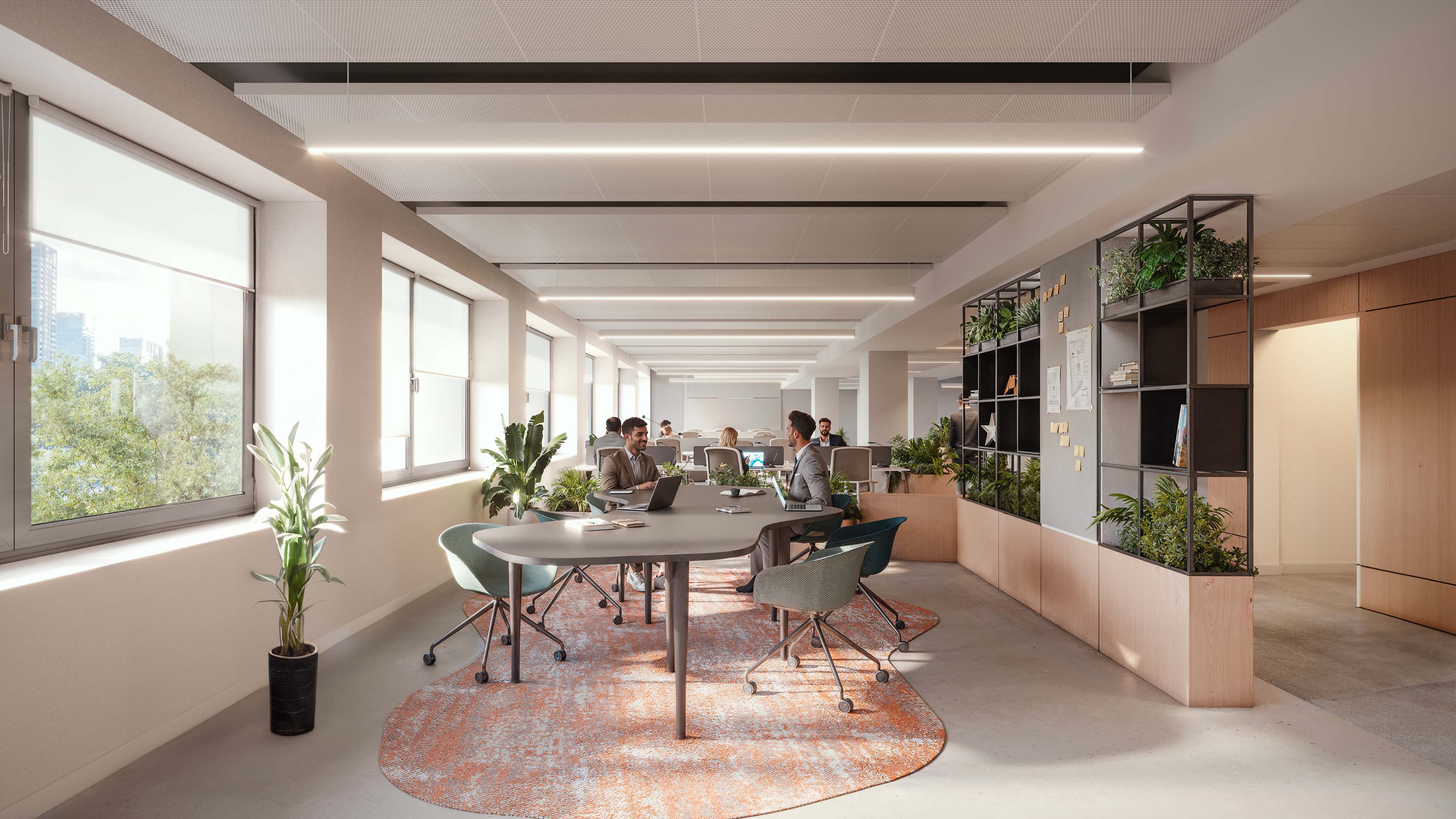
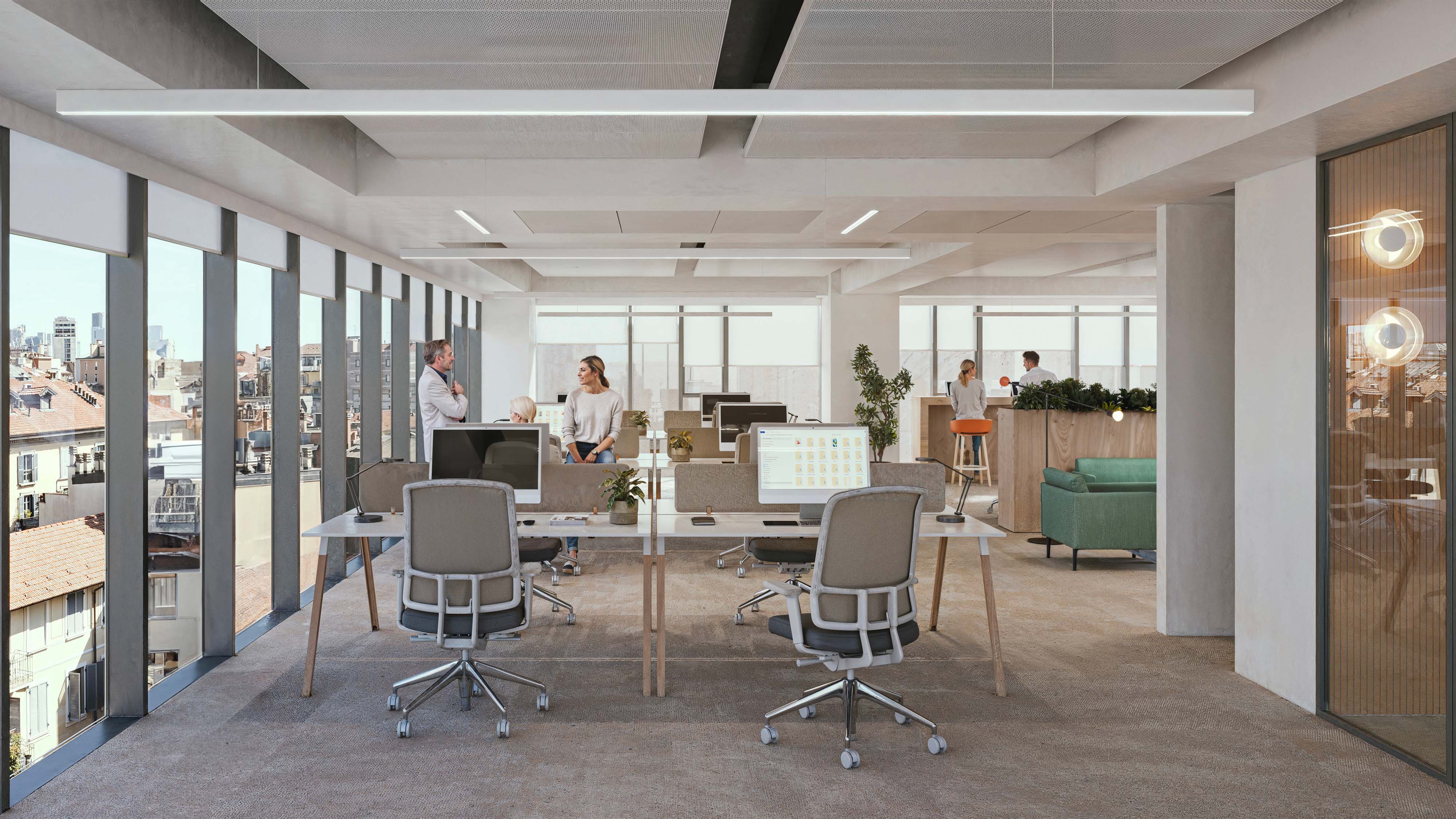
Gli ambienti di lavoro vengono ripensati per rispondere a bisogni sempre più fluidi e mutevoli: concentrazione e collaborazione, efficienza e comfort, privacy e condivisione non sono più condizioni separate, ma dimensioni che si alternano nelcorso della stessa giornata. Il progetto lavora su questa complessità, costruendo spazi capaci di supportare attività diverse senza irrigidirne l’uso.
Gli interni si aprono a nuove possibilità di relazione con l’esterno, mentre la corte diventa parte integrante dell’esperienza lavorativa. Non più semplice affaccio o spazio accessorio, ma un’estensione naturale dell’ufficio: un luogo dove lavorare in modo informale, incontrarsi, fare pausa o ritrovare concentrazione in un contesto più aperto e rigenerativo.
Il dialogo tra interno ed esterno amplia così i confini dell’ambiente di lavoro, trasformando la corte in un paesaggio abitabile: uno spazio intermedio, accogliente e versatile, capace di generare benessere, favorire nuove modalità di relazione e restituire qualità alla quotidianità professionale.
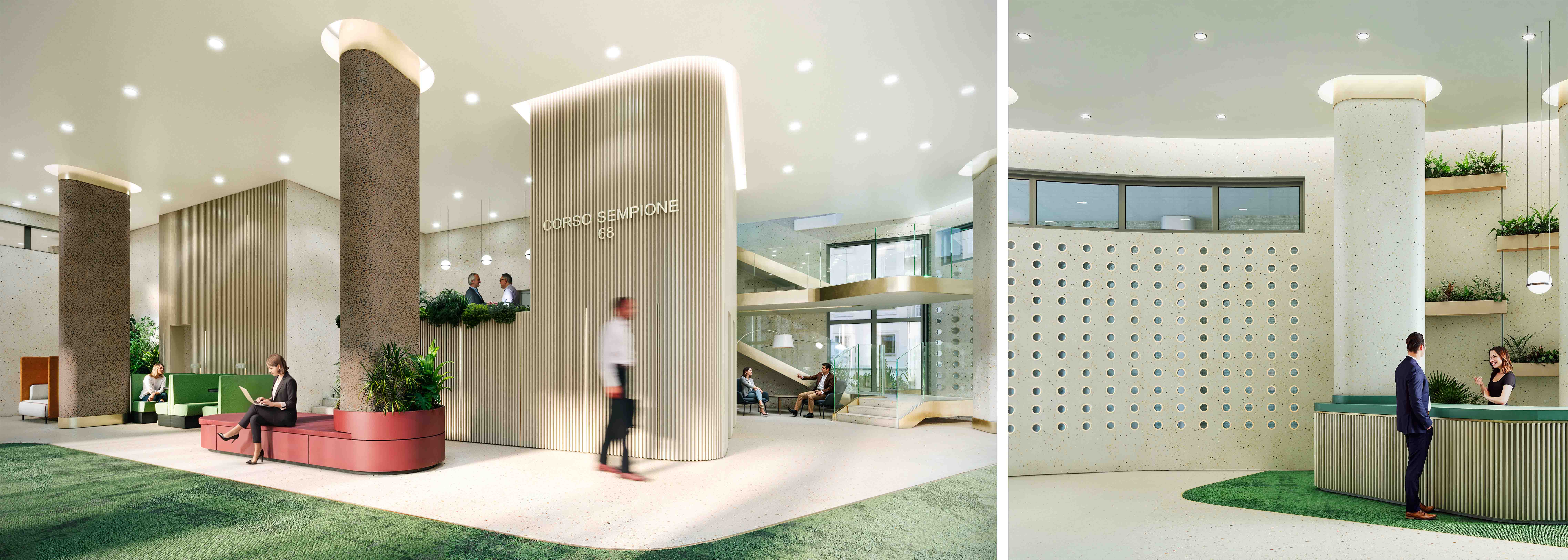
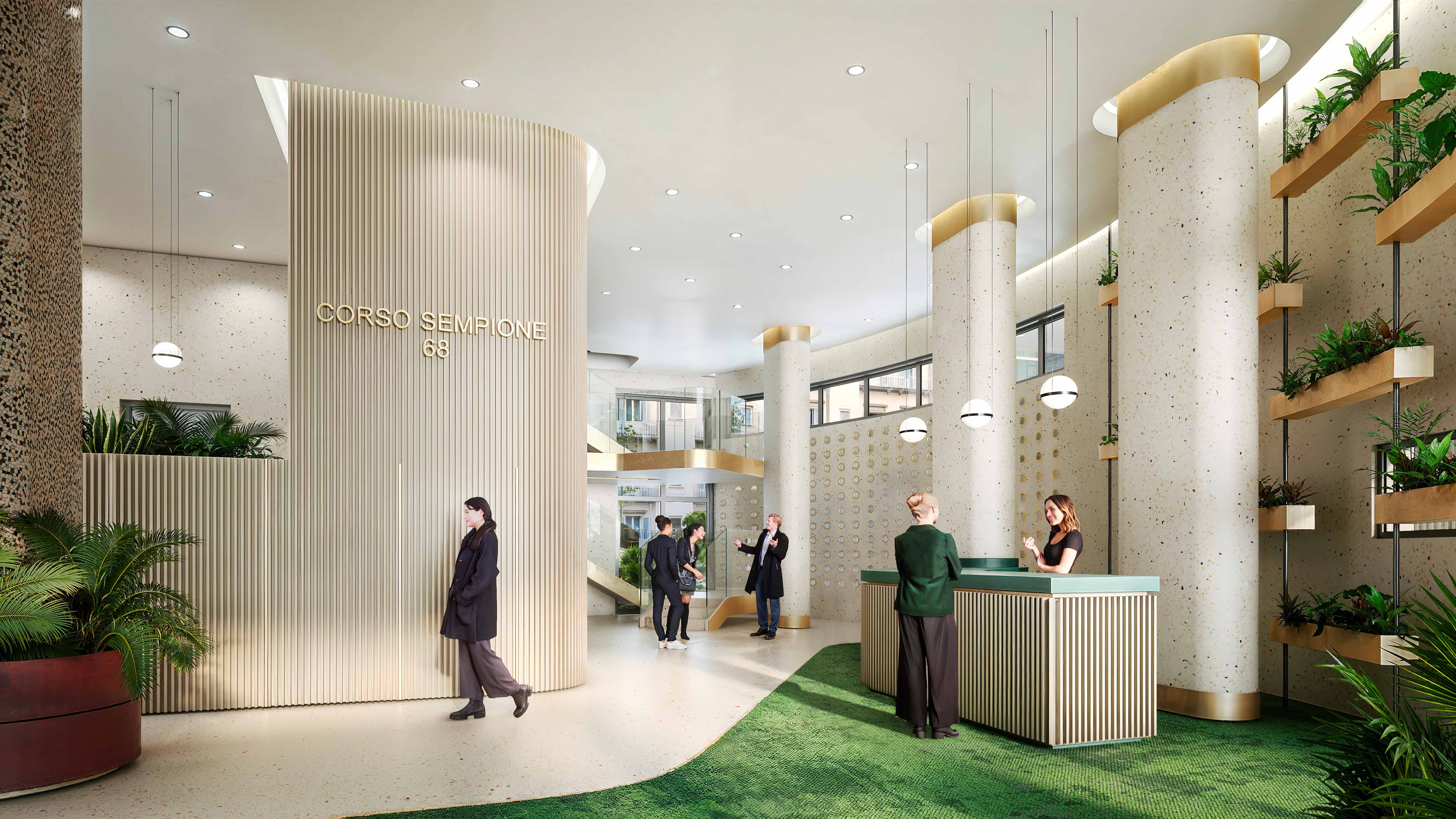
Nell’attacco a terra. il progetto si innesta con delicatezza sull’identità esistente dell’edificio. Il pavimento chiaro, continuo e minerale dialoga con il muro originale a piccoli inserti vitrei, preservandone la memoria materica e trasformandolo in fondale attivo della nuova esperienza.
Le superfici verdi a terra disegnano isole morbide e riconoscibili che accompagnano i flussi e definiscono aree di sosta. All’interno dello spazio, il verde costruisce un basamento abitabile: una soglia tra architettura e paesaggio interno, capace di mitigare la scala monumentale dell’atrio e rendere più fluida la relazione tra percorsi, attese e momenti informali.
Un nuovo valore urbano
Rigenerare Corso Sempione 68 significa restituire valore non solo a un edificio, ma a un intero frammento di città. Il progetto interviene su spazi oggi percepiti come secondari — il cortile interno, le aree di attraversamento, gli affacci meno rappresentativi — e li trasforma in luoghi condivisi, riconoscibili e capaci di costruire nuove relazioni tra edificio, utenti e contesto urbano.
Il nuovo involucro contribuisce al miglioramento delle prestazioni energetiche, del comfort interno e della qualità ambientale degli spazi di lavoro; il verde, integrato sia negli ambienti interni sia nella corte, diventa infrastruttura attiva per biodiversità, benessere e mitigazione microlimatica.
Il progetto costruisce così una rigenerazione integrata, in cui memoria e innovazione non si contrappongono, ma si rafforzano a vicenda. L’identità storica dell’edificio viene preservata e reinterpretata attraverso nuovi dispositivi spaziali, materici e paesaggistici, capaci di renderlo più aperto, accessibile e contemporaneo.
(en)
A tension between identity and transformation
The project stems from the tension between the need to preserve the building’s identity and the desire to transform it into a more open, efficient and livable place.
The historic façade is reinterpreted without erasing its character, improving transparency, performance and contemporary appeal. The ground floor, previously narrow and closed off, becomes a new urban threshold: a point of access, welcome and connection with Corso Sempione.
How can a building with a protected image start speaking to the contemporary city again?
A transformation behind the scenes
The transformation continues in the more hidden heart of the complex. What was once a mainly functional inner courtyard — perceived as a back area, a service space and a place people simply passed through — is reimagined as a new green oasis: a shared environment that brings value, quality and centrality to a part of the building that had previously been underused.
The courtyard becomes a new livable landscape, designed to support different uses throughout the day: informal work, breaks, meetings, waiting moments and social interaction. No longer a residual space, but an active threshold between inside and outside, expanding people’s everyday experience and creating new opportunities for connection.
Nature enters the project as a true infrastructure for wellbeing. It contributes to microclimatic comfort, supports biodiversity, improves the perception of the space and introduces a calmer, more welcoming and regenerative dimension. Greenery is not used as a decorative element, but as a device that can transform the atmosphere of the place and generate quality over time.
Un ecosistema di lavoro esteso
The workspaces are reimagined to respond to needs that are increasingly fluid and changing. Focus and collaboration, efficiency and comfort, privacy and sharing are no longer separate conditions, but dimensions that alternate throughout the same day. The project addresses this complexity by creating spaces that can support different activities without defining their use too rigidly.
The interiors open up to new relationships with the outdoors, while the courtyard becomes an integral part of the work experience. It is no longer just a view or an accessory space, but a natural extension of the office: a place for informal work, meetings, breaksor moments of focus in a more open and regenerative setting.
The dialogue between inside and outside expands the boundaries of the workplace, transforming the courtyard into a livable landscape: an intermediate, welcoming and versatile space that can generate wellbeing, encourage new ways of connecting and bring more quality to everyday work life.
At ground level, the project connects gently with the building’s existing identity. The light, continuous mineral floor dialogues with the original wall, characterized by small glass inserts, preserving its material memory and turning it into an active backdrop for the new experience.
Green surfaces on the floor create soft, recognizable islands that guide flows and define areas for pause. Within the space, greenery forms a livable base: a threshold between architecture and the interior landscape, able to soften the monumental scale of the atrium and make the relationship between circulation, waiting areas and informal moments more fluid.
A new urban value
Regenerating Corso Sempione 68 means bringing new value not only to a building, but to an entire fragment of the city. The project works on spaces that are currently perceived as secondary — the inner courtyard, circulation areas and less representative views — and transforms them into shared, recognizable places that can create new relationships between the building, its users and the urban context.
The new envelope helps improve energy performance, indoor comfort and the environmental quality of the workspaces. Greenery, integrated both inside the building and in the courtyard, becomes an active infrastructure for biodiversity, wellbeing and microclimatic mitigation.
The project creates an integrated regeneration process, where memory and innovation are not in opposition, but strengthen one another. The building’s historic identity is preserved and reinterpreted through new spatial, material and landscape elements, making it more open, accessible and contemporary.